
Carbon-Storing Trees: The Smart Choices for a Healthier, Greener Future
Learn how the right trees can capture more carbon and create healthier, more sustainable communities.
Carbon-storing trees do far more than add shade and beauty to our surroundings, they’re powerful allies in the fight against climate change. By absorbing carbon dioxide (CO₂), a major greenhouse gas, and storing it in their trunks, branches, roots, and surrounding soil, these trees help clean the air and cool the environment. The more we plant and the smarter we are about choosing the right species the greater our collective impact on cleaner air, cooler neighborhoods, and healthier communities.
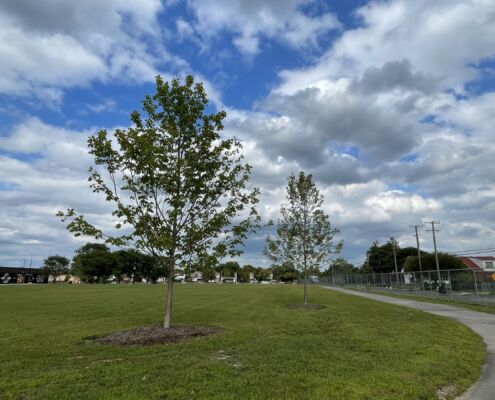
Whether you’re a homeowner looking to add a few new trees, a parks department planning an urban reforestation project, or a school facility manager greening a playground, the right trees can make a measurable difference in long-term carbon storage and sustainability.
See how Project EverGreen’s Clean Air Calculator helps determine the amount of carbon that is being sequestered from trees, plants, shrubs and turf.
Why Tree Choice Matters
Not all trees store carbon at the same rate. Factors like growth speed, mature size, wood density, and lifespan all influence how much carbon a tree can hold over time. Generally, large, long-lived, and fast-growing species that develop dense wood are the most efficient carbon absorbers.
That said, site conditions including soil quality, available space, and water should always guide your selection. A smaller tree that thrives for 80 years stores more carbon than a larger species that struggles and dies after 10 years.
Top Carbon-Storing Trees for Urban and Community Landscapes
Here are some of the best carbon-storing trees to consider for residential yards, parks, and public spaces across much of the U.S.:
- Oak (Quercus species)
Oaks are the undisputed champions of carbon storage. With broad canopies, dense wood, and lifespans that can exceed a century, species like white oak, red oak, and bur oak are long-term carbon vaults. They also support hundreds of native wildlife species, improving local biodiversity.
Best for: Parks, large yards, campuses, and open spaces.
Bonus: Excellent shade and stormwater absorption benefits.
- Maple (Acer species)
Maples, especially sugar and red maples, grow relatively quickly and offer broad, leafy canopies that store significant carbon. Their fall color and adaptability to different soil conditions make them favorites in both urban and suburban settings.
Best for: Streetscapes, schoolyards, and medium-sized properties.
Bonus: Provide exceptional seasonal beauty and habitat for pollinators.
- London Plane Tree (Platanus × acerifolia)
A hybrid of the American sycamore and oriental plane, the London plane tree thrives in urban environments with poor air quality or compacted soils. It’s a reliable performer where other trees struggle and can reach impressive sizes.
Best for: City parks, boulevards, and commercial landscapes.
Bonus: Excellent resilience against pollution and pruning.
- Sweetgum (Liquidambar styraciflua)
Known for its star-shaped leaves and colorful fall foliage, sweetgum trees are fast growers with substantial carbon-storing potential. They tolerate a variety of soil conditions and are well-suited for large public landscapes.
Best for: Parks, campuses, and larger properties.
Bonus: Beautiful seasonal color and high oxygen output.
- Bald Cypress (Taxodium distichum)
Though native to southern wetlands, bald cypress adapts well to drier conditions. It’s a long-lived, dense-wooded tree that has continued storing carbon for centuries. Its tolerance for both flooding and drought makes it ideal for stormwater management areas.
Best for: Wetlands, retention areas, and flood-prone zones.
Bonus: Adds unique texture and visual interest with its feathery foliage.
- Tulip Tree (Liriodendron tulipifera)
Also known as the yellow poplar, this fast-growing native species is one of the best for capturing carbon quickly. It grows tall and straight, making it a great choice for open spaces that can accommodate its height.
Best for: Parks, open fields, and large properties.
Bonus: Produces showy tulip-shaped flowers that attract pollinators.
How to Create a Carbon-Conscious Tree Plan
Planting the right mix of trees isn’t just about selecting species, it’s about creating a sustainable plan that supports long-term growth and maximum carbon storage. Here are a few tips to get started:
- Diversify your canopy. Plant a variety of species to protect against pests, diseases, and climate stressors. Diversity keeps your green space resilient and thriving.
- Think longevity. Prioritize trees that can live 50 years or more. The longer a tree lives, the more carbon it stores.
- Plan for space and maintenance. Match tree size to available space, ensuring roots and branches have room to grow without conflict with buildings or power lines.
- Plant smart. Fall and early spring are ideal for tree planting in most regions, giving roots time to establish before summer heat or winter freeze.
- Maintain consistently. Regular watering, mulching, and pruning help trees reach maturity when their carbon-storing power is greatest.
Growing a Greener Tomorrow
Every tree planted today is an investment in cleaner air, cooler communities, and a healthier planet. Whether it’s a single backyard oak or a citywide planting initiative, your efforts add up helping communities store more carbon and create thriving, sustainable green spaces for generations to come.
Project EverGreen is committed to promoting greener, healthier, more livable communities across the country. Together, we can make a measurable difference – one tree at a time.
Learn more at www.ProjectEverGreen.com